How children pick up Mandarin without realising
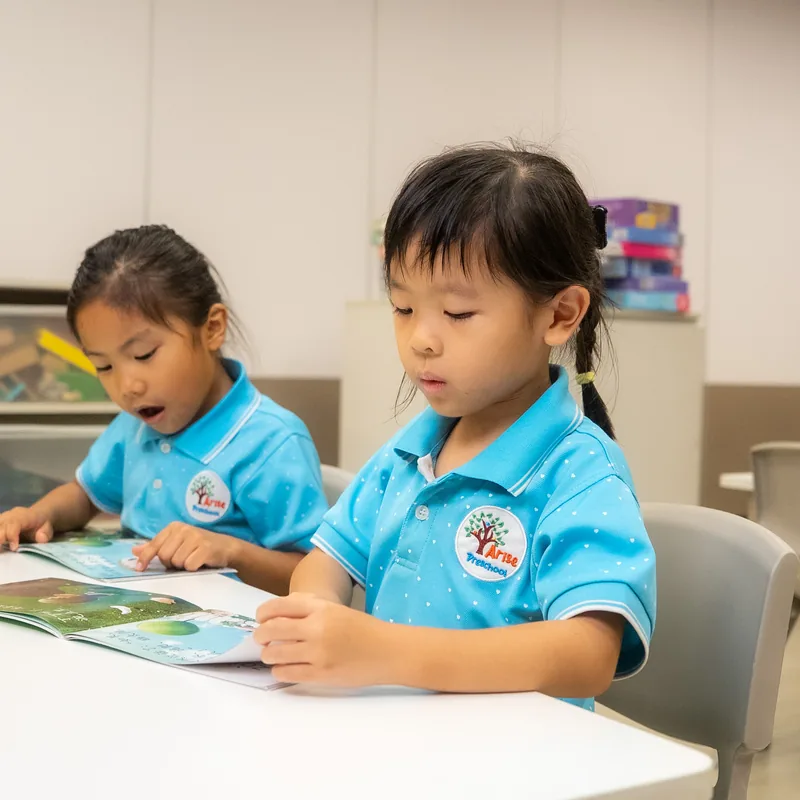
Parents sometimes ask, gently, whether their child is "really" getting any Mandarin out of the day. It's a fair question — there's no quiz at pickup. So here's what immersion actually looks like, hour by hour.
At Arise, Mandarin isn't a subject. It's a colleague. One of our teachers speaks English. Another speaks Mandarin. They move around the same room, doing the same activities, and the children quickly stop thinking of it as "Mandarin time" — it's just Mr Tan's voice, or Mei Laoshi's voice.
The morning routine
A child arrives. A teacher says good morning in Mandarin, and offers a hug. The child doesn't translate what was said — they understand it the way you understand a wave or a smile. That's the unit of immersion. It happens thirty times a day.
By Nursery, most children can:
- Follow simple instructions in either language without thinking about it
- Sing along to songs in both languages
- Ask for what they want, in whichever language the adult in front of them is speaking
What it doesn't look like
It doesn't look like flashcards. It doesn't look like a child being asked to "say it in Chinese." We don't drill, and we don't test. The aim is for the language to enter through the same door that the rest of childhood does — naturally, through people they trust.
"He started counting his blocks in Mandarin without anyone asking him to. We hadn't said a word about it at home." — a parent message we kept on the fridge for a long time.
That's the moment we're working toward. Not a performance, but a quiet choice the child makes when nobody's watching.